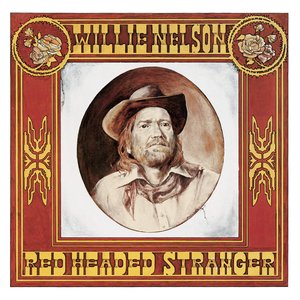
"Red Headed Stranger" is the eighteenth studio album by American outlaw country singer Willie Nelson, released in 1975. After the success of his recordings with Atlantic Records, Nelson signed with Columbia Records, which granted him full creative control over his work. The album was inspired by the "Tale of the Red Headed Stranger," a song Nelson performed while working as a disc jockey in Fort Worth, Texas. He decided to record the song after returning to Austin, Texas, from a trip to Colorado, and the album was produced at low cost at Autumn Sound Studios in Garland, Texas.
The album features sparse arrangements, primarily consisting of Nelson's guitar, piano, and drums. Columbia executives initially questioned its commercial potential, viewing the recordings as demo material, but Nelson's creative control allowed the album to be released without additional production.
A concept album, "Red Headed Stranger" tells the story of a fugitive on the run after killing his wife and her lover. It includes songs with brief poetic lyrics and reinterpretations of older material, such as Fred Rose's "Blue Eyes Crying in the Rain," Wolfe Gilbert's "Down Yonder," and Juventino Rosas' "O'er the Waves." Despite initial doubts from the label, the album achieved significant commercial success, earning multiple-platinum certification and establishing Nelson as a prominent figure in country music. "Blue Eyes Crying in the Rain," released as a single prior to the album, became Nelson's first number-one hit. The album’s title also became a lasting nickname for Nelson. "Red Headed Stranger" was ranked number 183 on Rolling Stone’s list of the 500 Greatest Albums of All Time and number one on CMT’s 40 Greatest Albums in Country Music. In 2010, it was inducted into the National Recording Registry.
In 1986, Nelson portrayed the Red Headed Stranger in a film adaptation of the album. The album has had a lasting cultural impact; the song "Time of the Preacher" was featured in the British television miniseries "Edge of Darkness," and its lyrics were referenced in the first issue of the comic "Preacher."
This User-contributed text is available under the Creative Commons By-SA License; Source: Last.fm.